 Česky
Česky
 English
Restart your life through movement: a practical guide to looking after your body (not only) on the massage table

Think of your body as a top-end sports car. If you bought a gleaming supercar, it probably wouldn't occur to you to ignore the warning lights on the dashboard, drive on flat tyres and change the oil once a decade. And yet we sometimes treat our own body – the only "car" we were given for the journey through life – in exactly that way. We ignore the warning creak in our back, put up with stiff shoulders, and simply override the warning light of a pounding head with a painkiller.
But looking after your body and your health is not a one-off service visit. It is a lifelong discipline, a daily ritual and a sign of respect for yourself. So how do you feel great in your body today, next week, and even after sixty? Let's look at specific tips and principles that will help you start a new era of your physical and mental self.
1. Massage is not a luxury – it is your secret weapon for muscle recovery
Many people labour under the misconception that massage is just an expensive line in the budget, something you treat yourself to once a year on holiday. The truth is that regular massage is a key pillar of prevention and care for the musculoskeletal system.
Forget "stroking" – if you want to solve a problem for real, you have to go beneath the surface. As our massage therapist Lukáš Sobotka puts it: "You've got a partner for stroking." A relaxation massage soothes a tired mind, but real relief from chronic pain comes only from targeted treatment.
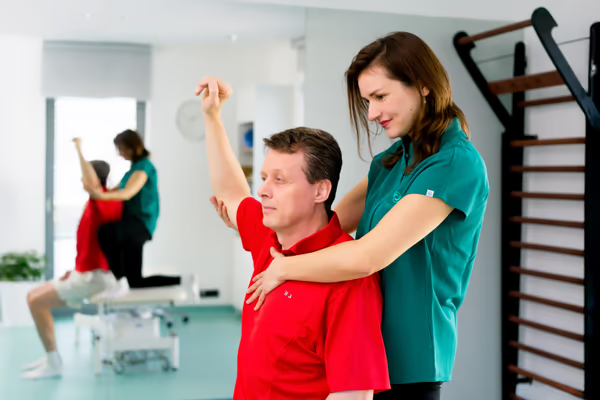
Sports massage (the alpha and omega of care): It goes deep, releasing a stiff spine, the shoulders and specific muscle imbalances. A modern massage therapist also combines it with elements of physiotherapy – you exercise and stretch right there on the table.
Lymphatic massage: A gentle but remarkably powerful technique that works like a spring clean for your body. It clears the lymphatic system, kick-starts detoxification and rids you of that heavy-legs feeling.
The golden rule of frequency:
- Just want prevention and to stay in shape? A visit once a month is enough.
- Are you an active athlete? Give your body a reset every 2 weeks.
- Dealing with an acute or long-standing problem? Start at a more intensive interval (every 14 days) and, once the worst of the tension has released, move to a monthly maintenance routine.
2. Beware the traps of modern times: massage guns and myths about pain
We live in an age when we can buy any device for home use. The hit of recent years – the massage gun – promises instant miracles, but it can be a good servant and a very bad master.
Think of it like tuning a musical instrument. If you yank at the strings blindly, you rarely tune the instrument – more likely you snap a string. In the same way, blindly running a massage gun over yourself in front of the TV without any knowledge of anatomy does more harm than good. The muscles first need to be properly prepared and released. If you don't know how, consult a professional before you launch into home "self-diagnosis".
And what about another eternal myth – does a massage have to hurt to work?
Absolutely not! A massage should never feel like medieval torture. It is fine to feel pressure when the therapist hits a tight spot (a so-called trigger point), but that pain should be a releasing one. The real "good" pain often arrives only on the second or third day – the muscles respond to deep work much as they do after an intense training session.
3. The holy trinity of longevity: massage, exercise and sauna
If you want a functional, pain-free body well into later life, there is no magic pill and no shortcut. There is, however, a proven recipe, which we call internally the "holy trinity of healthy movement":
1. Massage and recovery: Releases tension, improves blood circulation and the flexibility of the fascia (connective tissue). For deep release, modern fascial tools such as Graston instruments are used today – they reach where the human hand cannot.
2. Exercise and stretching: Muscles we don't use grow weak and stiff. The thoracic spine and neck muscles suffer most (the price of hours spent at computers and phones). Regular movement, stretching at home and strength training hold your frame together.
3. Sauna and heat therapy: Heat opens the blood vessels, flushes out toxins and prepares muscles and mind for complete release. It lowers the level of the stress hormone cortisol, the main culprit behind the unconscious clenching of the muscles around the neck and shoulders.
4. What to do (and not do) after a massage so you don't undo its effect
Leaving the massage room is only half the job. The other half is up to you and how you treat your body over the following 48 hours. After a deep massage your body is in a state of intensive recovery.
For the treatment to have maximum effect, follow these aftercare rules:
- ⚠️ STOP heavy training: For at least two days after a massage, skip strength training, intense running or demanding cardio. The muscles are relaxed and more prone to injury.
- ⚠️ No alcohol or heavy meals: Your body is trying to flush out the waste products that have been released. Don't burden it with toxins it then has to break down laboriously.
- ✅ Drink plain water: Water is like a flush for your tissues. After a massage, increase your intake of still water to help your kidneys eliminate everything harmful.
- ✅ Warmth and rest: Treat yourself to a warm shower, a quiet moment with a book or a gentle walk. Let your body "sleep off" the healing process.
Listen to the signals – your body speaks plainly
Regular prevention and rehabilitation care, in harmony with movement and massage, will help you keep your energy and vitality for life. Because you only have one body, and how you look after it today is how it will repay you tomorrow.